
Paul Jacobson, executive vice president and chief financial officer of General Motors, made a telling observation about GM’s current approach to electric vehicles at last week’s Federal Reserve Bank of Chicago’s 32nd Annual Automotive Insights Symposium in Detroit.
As you may recall, back in January 2021 GM CEO Mary Barra had announced the “aspiration” to end the production of gasoline- and diesel-powered vehicles by 2035, ushering in an all-electric future.Times change.At the Fed conference Jacobson said: “What we see right now is a regulatory environment that is more aligned with where the consumer demand sits right now, particularly taking about electric vehicles.”Said environment—the elimination of CAFE penalties for OEMs; the elimination of the $7,500 tax credit for consumers—resulted in a market share of EVs in 2025 of 7.8 percent.Of the vehicles GM sold in the US in 2025, some 6 percent were EVs.Since October GM has announced $7.6 billion in charges related to EVs.However, while acknowledging the non-trivial amount of money related to scaling back on its EV efforts—from programs to manufacturing to suppliers—Jacobson insisted:“It’s not were giving up. We’re not throwing in the towel. That was about an infrastructure that was geared to be able to make a million EVs a year. Because that’s what the regulatory environment was telling us we needed to do. . . .”(Was the consumer a consideration in any of this?)So with external change comes internal change, which led to non-trivial charges.
Jacobson continued:“We think demand is going to be much more naturally accretive. It’s not going to zero.”He said:“Electric vehicles are going to win in the end.”He added to that thought:“But it’s going to take some time.”Jacobson explained that because there is reduced EV market demand, it gives GM “an opportunity to help bring the costs down at the same time volume is going to ramp up naturally going forward.”So they’re working on things like lithium manganese-rich (LMR) batteries, which are lower cost than the presently common nickel manganese cobalt (NMC) batteries, and switching from pouch cells to prismatic cells, which are less expensive.He said that the current uncertainty in the market “is a little bit of a blessing in disguise because with lower EV demand it gives us a period of time where we can focus on that architecture.”And he said the transformation that it going to help the company achieve variable profitability on its entire EV lineup is “going to take a little bit of time. But I don’t …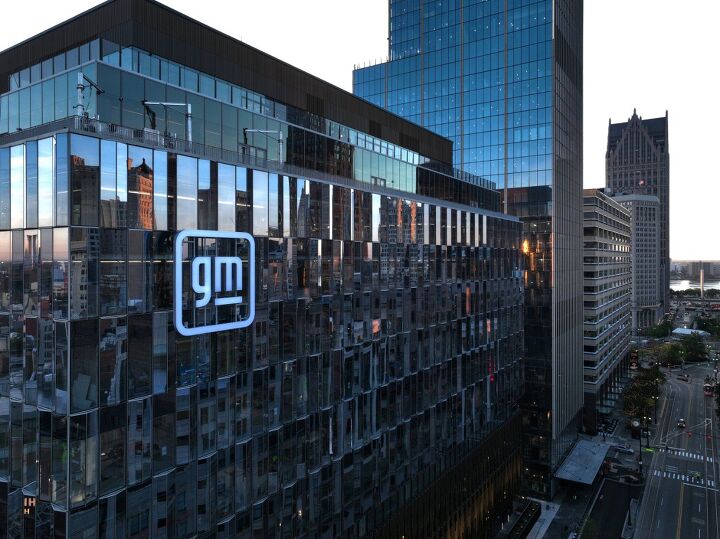
Go to Source
Author: Gary Vasilash