
In this episode of the VWIDTalk Podcast, we analyze real-world data from a mountain ski trip in 20+ inches of snow.We demonstrate how freezing temperatures and a 4,000-foot elevation gain impact EV range, limit power output to 50%, and affect regenerative braking. Learn how to manage mountain physics, deal with frozen sensors, and use essential winter gear like snow socks to stay safe.
What we cover in this episode:Mountain Physics: How much battery it really takes to climb 4,000 feet versus the energy you get back on the way down.Power Limits: Why your car might only give you 50% power when the battery is near freezing.Sensor Failures: Dealing with “intimidating” dashboard errors when the front radar gets covered in slush.The Rescue: How “snow socks” and a little manpower saved Jan after a 90-degree slide in a potholed parking lot.Winter Essentials Checklist:We also break down why you should carry sand, a 12V jumpstarter, and why upgrading to an AGM battery might save your trip.Subscribe for our upcoming deep dive on how to change and code your 12V battery!
Check out the VWIDTalk Podcast on YouTube and wherever you get your podcasts ( Apple Podcasts, Spotify, Overdrive and more).A transcript, cleaned up by AI and edited by a staffer, is below.The TTAC Creators Series tells stories and amplifies creators from all corners of the car world, including culture, dealerships, collections, modified builds and more.[Image: YouTube Screenshot]Become a TTAC insider. Get the latest news, features, TTAC takes, and everything else that gets to the truth about cars first by subscribing to our newsletter.
Transcript:Podcast Transcript: Winter EV Driving & Mountain TripsHosts: Jan & WesTopic: Real-world impact of cold weather, elevation, and snow on EV range and performance.The “Guess-o-Meter” (GOM) and Range AnxietyJan recently took his EV on a ski trip involving a 4,000-foot elevation gain and 25 inches of snow.Pre-Trip: The car was charged to 100%. Based on recent flat-ground driving ($3text{ miles/kWh}$), the car predicted 199 miles of range.The Ascent: After driving 75 miles uphill, the battery dropped to 44% with only 64 miles of estimated range left. The consumption worsened to 2 miles/kWh.The Descent: Physics works in your favor on the way down. Jan returned with 12% battery and 22 miles of range.The Reality: While the car thought the trip would take 135 miles of range, it actually took 177 miles. Cold and elevation resulted in a 15% loss compared to the initial estimate.Key Learning: Uphill climbs are expensive, but regenerative braking recovers a significant portion of that energy on the way down. However, you won’t get it all b …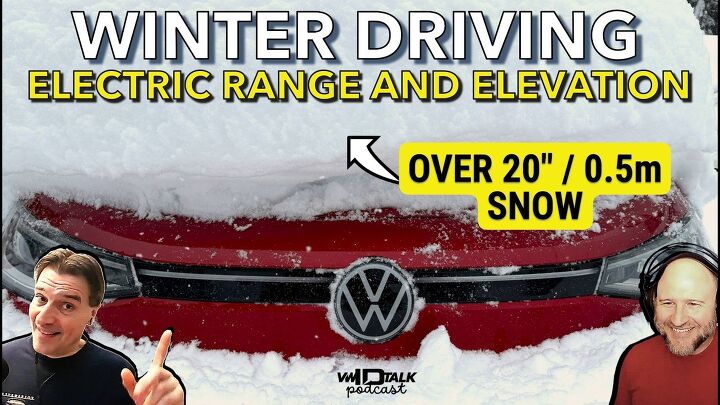
Go to Source
Author: VWIDTalk Podcast, TTAC Creator